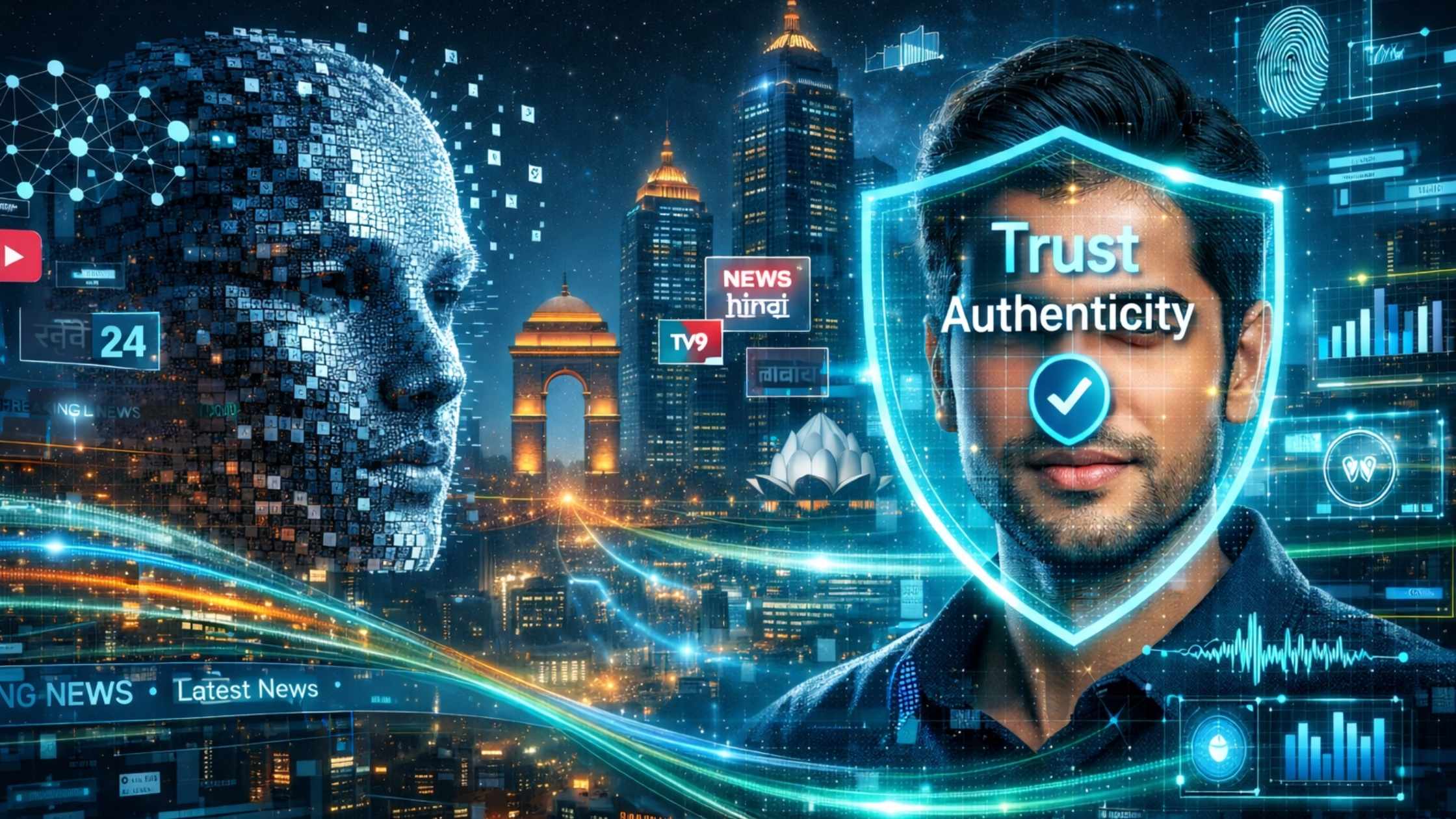
Let’s be honest—India’s media ecosystem isn’t just changing; it’s sprinting ahead at breakneck speed. One moment, a story breaks on a regional news channel; the next, it’s clipped, remixed, translated, and shared across social platforms, messaging apps, and influencer feeds. Toss hyper-realistic deepfake videos, AI-cloned voices, and synthetic images into that mix, and suddenly the old rules don’t apply anymore.
This is where The Future of Media Monitoring in India: Defending Trust, Authenticity, and Brand Integrity in the Age of Deepfakes takes center stage.
We now live in a world where visibility without authenticity is a liability. Seeing is no longer believing. Trust—fragile, hard-earned, and easily shattered—has become the most valuable brand currency of all. Media monitoring, once a passive listening exercise, has evolved into a real-time discipline obsessed with verification, validation, and rapid response. Blink, and the narrative’s already run away with itself!
The Future of Media Monitoring in India: From Noise to Narrative Control
Traditional media monitoring focused on counting mentions. How many headlines? How much airtime? What was the reach? Useful, sure—but wildly insufficient today.
The Future of Media Monitoring in India: Defending Trust, Authenticity, and Brand Integrity in the Age of Deepfakes demands something sharper. It’s no longer about who said what; it’s about what’s real, what’s manipulated, and what needs action—right now.
Modern media monitoring in India spans:
- Print publications (national, regional, vernacular)
- Broadcast television and radio
- Online news portals and blogs
- Social platforms and UGC ecosystems
- Influencer-led narratives
- Messaging spillovers from private and semi-private groups
Signals are correlated in seconds, not days. The objective? Establish truth under pressure.
Media Monitoring Reimagined: From Listening to Verifying
Here’s where things get interesting.
Today’s media monitoring systems deploy multi-layered intelligence pipelines that fuse AI speed with human judgment. It’s not magic—it’s architecture, discipline, and relentless iteration.
What these pipelines actually do
- Correlate visual, audio, and textual signals across platforms
- Flag anomalous content patterns linked to brand assets, executives, or spokespersons
- Trigger automated alerts for suspicious virality spikes
- Route findings to human analysts for rapid validation and escalation
This convergence of machine intelligence and human intuition defines modern monitoring. AI spots the needle; humans decide what it means.
Deepfakes as an Operational Risk—Managed in Real Time
Let’s not sugarcoat it—deepfakes aren’t just a tech curiosity anymore. They’re an operational risk with real-world consequences: financial fraud, market volatility, political manipulation, and reputational damage.
The smart move? Treat deepfakes like any other mission-critical risk—systematically, relentlessly, and in real time.
1. Continuous Real-Time Scanning
Always-on crawlers monitor:
- Social platforms
- News websites
- Forums and comment threads
- Video-sharing platforms
- Influencer ecosystems
Anything tied to brand names, logos, leadership likeness, or spokespersons gets watched—especially when the context feels… off.
2. Authenticity Assessment at Speed
Detection engines analyze:
- Lip-sync inconsistencies
- Facial micro-artifacts
- Audio spectral anomalies
- Metadata gaps and compression clues
Reverse image searches, cross-platform corroboration, and trusted-source triangulation accelerate verification. No waiting around. No crossed fingers.
3. Coordinated Response & Takedown
Once something’s flagged:
- Platform-specific takedown protocols are initiated
- Clarifications are issued fast
- PR, legal, and customer support align instantly
The goal? Stop amplification before confusion snowballs.
4. Institutional Learning & Hardening
Every incident feeds the system:
- Detection thresholds improve
- Crisis playbooks evolve
- Digital watermarking and cryptographic provenance are refined
Each response makes the next one stronger. No wasted lessons.
India’s Media Reality: Scale, Speed, and Linguistic Complexity
India doesn’t do “simple.” And that’s putting it mildly.
Effective media monitoring here operates across 22+ official languages, countless dialects, and deeply regional narratives. National headlines coexist with hyperlocal stories that can erupt overnight.
Omnichannel Coverage That Actually Works
- Print: National dailies, regional papers, trade journals
- Broadcast: Prime-time debates, regional TV, radio talk shows
- Online: News portals, blogs, SEO surfaces
- Social & UGC: X, Instagram, YouTube, LinkedIn, emerging platforms
- Influencers: Macro voices and micro-communities
AI-powered OCR and speech-to-text engines ensure nothing slips through—even when brand mentions appear only in spoken form.
Real Incidents, Real Outcomes: Proof of Vigilance
Theory’s great. Reality’s better.
When a deepfake video falsely showed Sachin Tendulkar endorsing a gaming app scam, real-time media monitoring made all the difference. Detection tools flagged lip-sync anomalies, clarifications were issued, and takedowns followed—before widespread damage could set in.
In another case, synthetic endorsements involving prominent business families were identified using audio synthesis markers and metadata gaps. Debunked. Removed. Crisis averted.
Perhaps the most telling example? HDFC Bank partnered with an AI startup to launch a controlled deepfake awareness campaign. The goal wasn’t fear—it was education. The result? Consumers finally saw just how convincing fraud can look.
Lesson learned: speed and vigilance define outcomes.
Strategic Value Beyond Crisis: Intelligence That Compounds
Media monitoring isn’t just a fire extinguisher. Done right, it’s a growth engine.
Reputation Management as a Continuous Function
- Quantify sentiment shifts
- Map narrative drivers
- Identify advocates and detractors
- Neutralize misinformation early
Small corrections today prevent big disasters tomorrow.
Competitive Intelligence at Market Speed
Monitoring competitors reveals:
- Product launches and pivots
- Messaging shifts
- Influencer tie-ups
- Crisis response patterns
That intel informs pricing, positioning, and counter-campaigns—fast.
Customer Insight Without Filters
Unprompted feedback is gold:
- Complaints highlight usability gaps
- Praise reveals brand strengths
- Feature requests signal demand
Regional preferences surface naturally, guiding smarter decisions.
Measurable PR & Marketing Impact
Coverage is translated into:
- Share of voice
- Sentiment ratios
- Reach and engagement
- Message penetration
Communications finally connect to outcomes that matter.
Architecture of Modern Media Monitoring (India-Ready)
At the heart of The Future of Media Monitoring in India: Defending Trust, Authenticity, and Brand Integrity in the Age of Deepfakes lies a closed-loop system:
- Multi-Channel Ingestion
- AI Detection & Anomaly Scoring
- Human Verification & Contextual Analysis
- Alerting & Crisis Protocols
- Takedown, Clarification, Stakeholder Communications
- Post-Incident Learning & Hardening
And then—back to step two. Continuous improvement, baked in.
The Road Ahead: Predictive, Provenance-First Monitoring
The future’s already knocking. Loudly.
What’s coming next?
- Predictive risk scoring to surface issues before virality
- Voice & video emotion analysis for podcasts and vlogs
- Deepfake detection at scale across short-form video
- Hyperlocal geo-monitoring for regional influence flows
- Provenance-by-design using cryptographic signatures and watermarks
As India’s digital audience explodes, media monitoring becomes the central nervous system of brand strategy.
Frequently Asked Questions (FAQs)
What makes media monitoring in India uniquely challenging?
India’s linguistic diversity, regional media density, and rapid content virality make comprehensive monitoring complex and essential.
Can AI alone detect deepfakes reliably?
Not entirely. AI flags anomalies quickly, but human verification provides context, judgment, and accuracy.
Is media monitoring only useful during crises?
Not at all! It delivers ongoing reputation insights, competitive intelligence, and customer feedback.
How fast should a response be to a deepfake incident?
Minutes matter. The earlier the response, the lower the amplification and damage.
Conclusion: Trust Is the Ultimate Brand Asset
Here’s the bottom line—seeing is no longer believing. In India’s hyper-connected reality, truth must travel faster than fiction.
The Future of Media Monitoring in India: Defending Trust, Authenticity, and Brand Integrity in the Age of Deepfakes isn’t about paranoia; it’s about preparedness. Integrated deepfake detection, human verification, and decisive response protect consumers, preserve reputations, and sustain trust at internet speed.
We don’t just observe narratives anymore. We validate them. We defend them. And when necessary, we reshape them responsibly.
In an era defined by synthetic media, vigilance isn’t optional—it’s the advantage that endures.