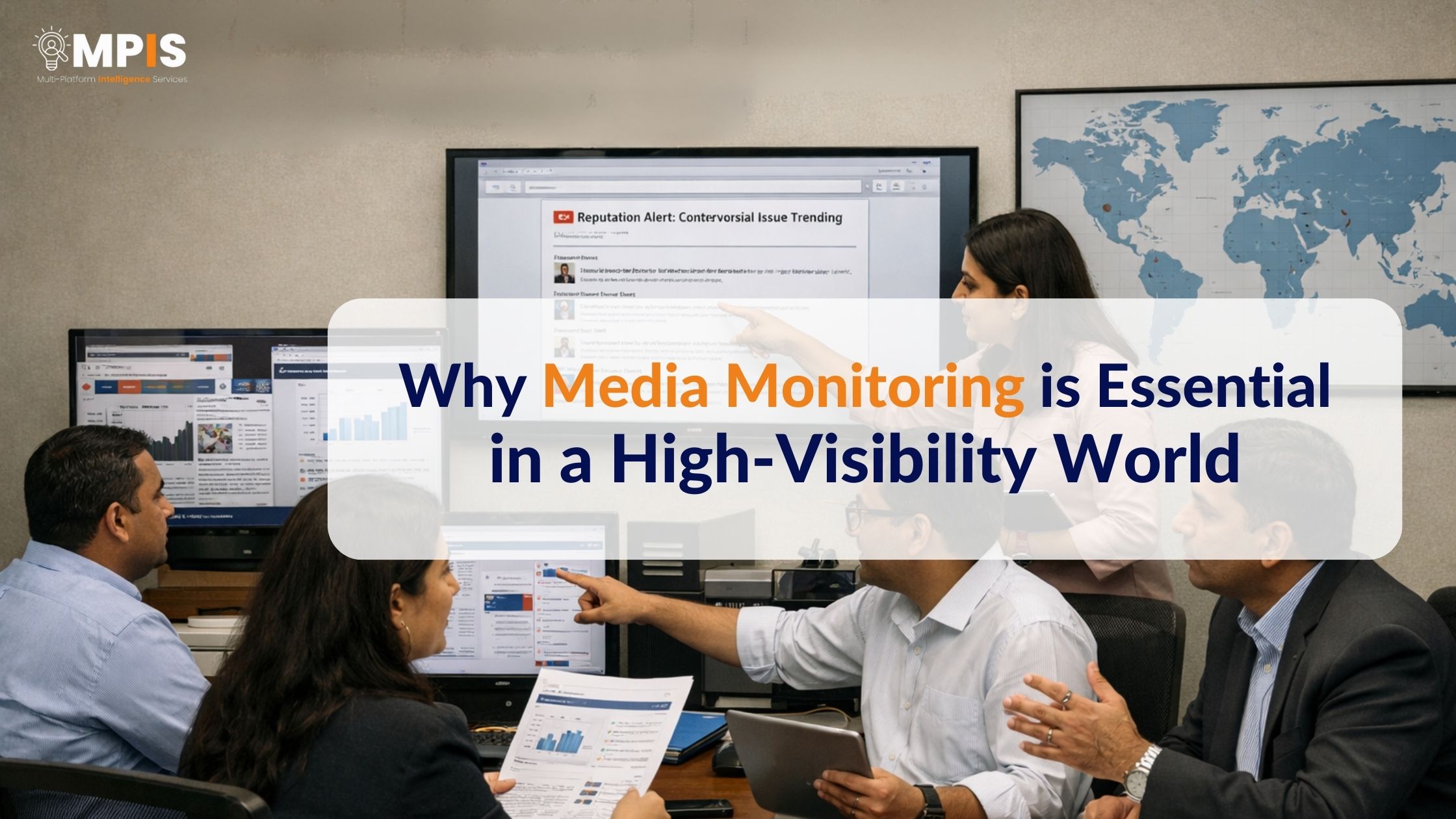
Let’s face it—information doesn’t wait anymore. It doesn’t pause for approvals, it doesn’t slow down for strategy decks, and it certainly doesn’t care about office hours. In a communication environment defined by velocity, fragmentation, and permanent visibility, information is no longer episodic—it’s continuous. Media narratives now emerge, evolve, and solidify in compressed timeframes across print, broadcast, digital publications, and social platforms.
That’s precisely why Media Monitoring as a Strategic Necessity for Modern Organizations isn’t a lofty idea—it’s operational reality. What used to be a background PR function has become a front-line intelligence capability. Organizations that fail to monitor the media environment don’t just miss stories—they lose narrative control, reputational leverage, and competitive clarity.
And let’s be honest—once a narrative takes hold, reversing it is like trying to put toothpaste back in the tube. Awkward, messy, and mostly futile.
This article explores media monitoring not as a reporting convenience, but as a strategic discipline that empowers leadership, protects brand equity, and sharpens competitive positioning in a permanently visible economy.
Understanding Media Monitoring in the Contemporary Media Ecosystem
At its core, media monitoring is the systematic identification, tracking, classification, and analysis of media content relevant to an organization, its leadership, its products, and its broader operating environment. Sounds straightforward, right? Well, not quite.
Modern media ecosystems are sprawling and chaotic. They include:
- Traditional outlets like newspapers, magazines, television, and radio
- Digital-first platforms such as online news portals and blogs
- Community-driven spaces like forums and comment sections
- Video ecosystems including live streams and short-form clips
- Social networks where narratives ignite and spread in seconds
Contemporary monitoring frameworks move far beyond counting mentions. They structure enormous volumes of unstructured data into actionable intelligence. By continuously scanning for defined keywords, themes, entities, sentiment patterns, and contextual signals, media monitoring transforms raw exposure into insight.
In short, it turns noise into knowledge—and knowledge into foresight.
Media Monitoring as a Strategic Necessity for Modern Organizations in a Continuous Information Environment
Here’s the uncomfortable truth: organizations no longer control when conversations start. They only control whether they’re paying attention.
Media Monitoring as a Strategic Necessity for Modern Organizations in a communication environment defined by velocity, fragmentation, and permanent visibility is about staying synchronized with reality. Narratives don’t wait to be discovered—they’re already forming while internal teams debate responses.
Without continuous monitoring:
- Issues escalate before leadership notices
- Misinformation hardens into perceived truth
- Opportunities for proactive positioning vanish
With it, organizations gain early visibility into narrative formation—before perception becomes permanence.
The Strategic Evolution of Media Monitoring
Once upon a time, media monitoring meant clipping newspaper articles and filing them away. Yesterday’s news, literally.
Today? That model’s obsolete.
Modern media monitoring has evolved into real-time intelligence systems designed for immediacy, context, and interpretive depth. This shift mirrors fundamental changes in media behavior:
- News cycles operate continuously, not discretely
- Social platforms accelerate narrative amplification
- Public opinion forms before official responses are issued
- Search engines archive perception indefinitely
In this environment, delay equals loss of control. Media monitoring ensures organizations aren’t reacting to yesterday’s headlines—they’re responding to today’s signals.
Media Monitoring as an Instrument of Brand Governance
Brand reputation isn’t built in boardrooms alone. It’s shaped—often unpredictably—by journalists, consumers, influencers, critics, and algorithms.
Media monitoring provides governance over this decentralized process.
By observing how a brand is referenced, contextualized, and evaluated across channels, organizations gain:
- Continuous visibility into brand sentiment
- Early detection of misinformation or narrative drift
- Evidence-based inputs for recalibrating messaging
This governance layer ensures brand positioning stays coherent across platforms and markets, even when direct message control is limited.
And let’s be real—control is an illusion anyway. Awareness is power.
Competitive Intelligence Through Media Monitoring
Media monitoring isn’t just about watching yourself—it’s about understanding the battlefield.
By tracking competitor mentions, executive statements, product launches, campaign narratives, and public reactions, organizations develop a clear sense of relative positioning.
Competitive media intelligence supports:
- Identification of strategic moves by competitors
- Analysis of market response to rival initiatives
- Detection of white spaces in messaging or offerings
- Benchmarking share of voice and sentiment
Instead of playing catch-up, organizations can anticipate, adapt, and outmaneuver. That’s not reaction—that’s strategy.
Crisis Anticipation and Narrative Risk Management
Crises rarely arrive unannounced. They whisper before they scream.
Media monitoring detects early warning signs such as:
- Unusual spikes in negative sentiment
- Rapid conversation velocity in niche communities
- Repeated framing of a brand alongside risk-related terms
When detected early, organizations can:
- Escalate internally before public escalation
- Coordinate cross-functional response strategies
- Contain misinformation before mainstream adoption
- Preserve stakeholder confidence during uncertainty
This transforms crisis management from damage control into narrative containment. Big difference.
Media Monitoring in Leadership Decision-Making
Leadership decisions now unfold under constant external scrutiny. Public sentiment influences regulators, investors, partners, and employees—sometimes instantly.
Media monitoring equips leadership with contextual awareness that’s grounded in reality, not assumptions.
Structured intelligence informs:
- Timing and framing of strategic announcements
- Policy positioning and public commitments
- Mergers, acquisitions, and restructuring narratives
- Executive visibility and thought leadership
Decisions aligned with external perception reduce friction, backlash, and misalignment. It’s not about pleasing everyone—it’s about understanding the environment before acting.
Social Media Monitoring as a Behavioral Intelligence Layer
Social platforms are messy, emotional, and fast. They’re also incredibly revealing.
Monitoring social media delivers behavioral intelligence by tracking:
- Hashtags and keyword clusters
- Engagement velocity and amplification patterns
- Sentiment swings and emotional triggers
This insight reveals:
- How audiences react in real time
- Which influencers drive momentum
- Where cultural and consumer trends are heading
Social monitoring isn’t just listening—it’s learning how people behave when they think no one’s watching.
Influencer and Opinion Leader Identification
Not all voices carry equal weight. Some shape narratives. Others echo them.
Media monitoring systematically identifies journalists, analysts, bloggers, and creators who function as narrative multipliers. It reveals who drives conversation, how they frame topics, and where influence concentrates.
Organizations use this intelligence to:
- Build targeted media and influencer relationships
- Anticipate editorial direction
- Align partnerships with credible voices
- Amplify narratives through trusted intermediaries
Spray-and-pray outreach? Outdated. Precision influence? That’s the game now.
Measurement, Reporting, and Strategic Accountability
What gets measured gets managed—and media monitoring makes communication measurable.
Key indicators include:
- Coverage volume and prominence
- Sentiment distribution
- Share of voice
- Thematic alignment
Structured reporting enables:
- Objective evaluation of campaigns
- Executive dashboards for oversight
- Long-term reputation trend analysis
- Evidence-based justification of communication investment
No fluff. No guesswork. Just accountability.
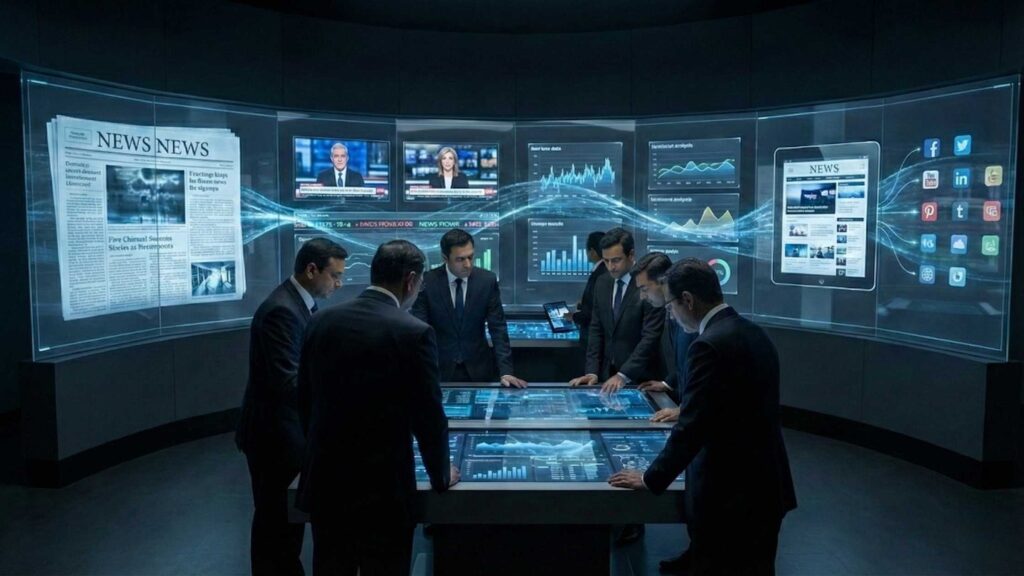
Integrated Media Monitoring Architecture
Effective media monitoring operates as a connected system—not a collection of disconnected tools.
A typical architecture includes:
- Media source ingestion (print, broadcast, digital, social)
- Data collection and crawling
- Keyword and entity filtering
- Sentiment and contextual analysis
- Intelligence dashboards and reporting
- Strategic action across PR, marketing, and leadership
This flow ensures insight doesn’t get stuck in reports—it drives decisions.
Media Monitoring as a Strategic Necessity for Modern Organizations in a Permanently Visible Economy
Permanent visibility changes everything. Search engines remember. Screenshots last forever. Context rarely survives virality.
Media Monitoring as a Strategic Necessity for Modern Organizations in a communication environment defined by velocity, fragmentation, and permanent visibility ensures continuity of awareness across time.
By maintaining both historical intelligence and real-time insight, organizations can:
- Track reputation evolution
- Identify recurring narrative patterns
- Assess long-term impact of decisions
- Preserve institutional memory
That’s not just monitoring—that’s organizational resilience.
FAQs
What is media monitoring in simple terms?
Media monitoring tracks and analyzes how an organization is mentioned across media channels to understand perception, sentiment, and narrative trends.
Why is media monitoring strategic rather than tactical?
Because it informs leadership decisions, risk management, brand governance, and competitive positioning—not just reporting.
How does media monitoring differ from social listening?
Social listening focuses primarily on social platforms, while media monitoring spans print, broadcast, digital, and social ecosystems.
Can media monitoring prevent crises?
It can’t stop every crisis, but it can detect early warning signs and enable faster, more effective responses.
Conclusion: Media Monitoring as Organizational Infrastructure
Media monitoring is no longer optional, peripheral, or reactive. It’s foundational.
As Media Monitoring as a Strategic Necessity for Modern Organizations continues to define competitive advantage, those who invest in continuous intelligence will remain adaptive, informed, and aligned with the narratives shaping their external reality.
In a world where perception drives value, authority, and trust, awareness isn’t a luxury—it’s infrastructure.
And honestly? Organizations that ignore it do so at their own risk.